
Go deeper with each question.
Ask in everyday business language and follow a trend down to individual records. If the data scope is unclear, establish it first.
Learn moreConnect data and knowledge across your business. Ask follow-up questions about any number, see where each answer comes from and decide what to do next.
Connect business systems, collaboration tools and data platforms to explore scattered information in one place.
 Microsoft Excel
 Feishu Base
 WPS
 DingTalk
 Salesforce
 MySQL
 Yonyou
 SAP
 Power BI
Business data supplies the facts, company knowledge adds context and the ontology aligns definitions. Access controls and sources follow each question through to its answer.
Explore the four layers Explore the architecture and data flowIntelligenceNatural language to SQL
The question sets the subject, period and metric.
ExperienceWeb console
ERP orders supply the year-on-year figures.
ExperienceAIP-TALK chat
The chat sits inside the existing business application.
ExperienceVisual understanding
The sketch places the filters and charts.
ExperienceSSO embedding
Staff sign in with their existing portal account.
ExperienceMessaging channels

How much did we sell last month? How does that compare with last year?
Last month · Lines A–D

Which line sold the most?
Line A, with 37.6% of sales.

ExperienceOpenAPI
A POST request sends the question to the API.
ExperienceCLI / SDK
The cow ask command checks year-on-year sales.
IntelligenceNatural language to SQL
The question sets the subject, period and metric.
IntelligenceDirect answers
A repeated question can use an approved reply.
IntelligenceOntology
Each receivable is linked to its customer.
IntelligenceKnowledge retrieval (RAG)
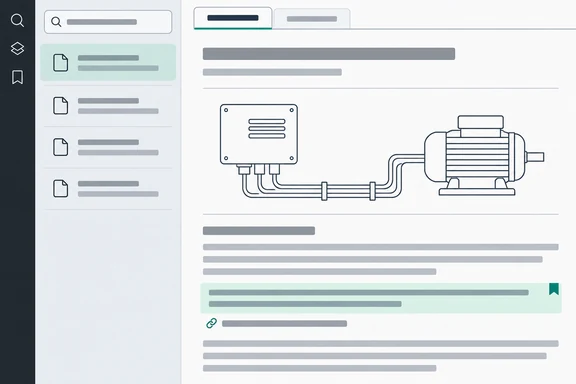

Action in the manual Check QF1 and the power module
IntelligenceExpert reasoning (MoE)
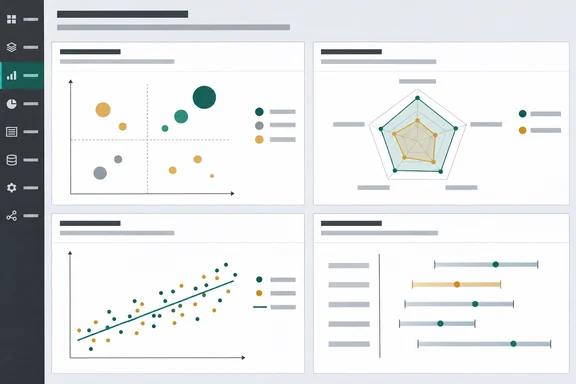
Which strategic objective would this investment support?
IntelligenceInsights and review
Contract value (CNY bn)
What to check461 contracts were signed, and total value rose 20.8% from Q1. Check whether a few large contracts account for the rise.
What to revisitCompare Q3 contract count and value before treating the peak as a lasting trend.
IntelligenceTerminology learning
“Cash received” and “collections” are candidate synonyms.
GovernanceTenant isolation
Company A’s data belongs to its tenant.
GovernancePermissions
The analyst can read the approved order and customer tables.
GovernanceCredential security
The connection password cannot be stored as plain text.
GovernanceRead-only safeguards
The query can total sales by region.
GovernanceAudit
The East China analyst queried ERP orders.
GovernanceAnswer provenance
The query used 12 ERP order rows.
DataConnectors
DataSQL dialects
Each database is asked for 10 orders.
DataFederated queries
CRM supplies customers, ERP orders and MES production progress.
DataConnection management
An available connection can serve another query.
DataRate limits and circuit breakers
Requests within the limit are admitted.
Ask a question, investigate the reasons and check the result. AI-Soda Brain connects scattered information into a clear workflow.
Ask in everyday business language and follow a trend down to individual records. If the data scope is unclear, establish it first.
Learn moreRead text, tables and diagrams in context. Return to the original passage to check a professional judgment.
Learn moreConnect concepts, relationships and calculation rules so that teams start with the same business definition.
Learn moreExplore workflows in manufacturing, campuses, healthcare, fleets and emergency response. The examples in this overview use synthetic content to illustrate methods and their limits.
Start with sales analysis and knowledge retrieval. Identify what each source covers and build a judgment you can verify.
Explore the scenarioUse consistent definitions for leasing, collections and service metrics to trace what changed and why.
Explore the scenarioDistinguish alert counts, mileage and incident definitions, then trace each finding back to the evidence.
Explore the scenarioFind technical guides, evaluation templates and engineering articles to plan a hands-on assessment.
Visit the developer centerRead about engineering methods, evaluation practice and business applications.
Explore how data becomes an answer, then plan the connections and checks your team needs.