
Build the knowledge base from reliable material
Start with documents that have known versions and owners. Scans, tables and illustrations require different parsing methods. Before import, check page order, image clarity, tables of contents and duplicate versions. These checks do more for reliable retrieval than simply adding files.
Read text and illustrations together
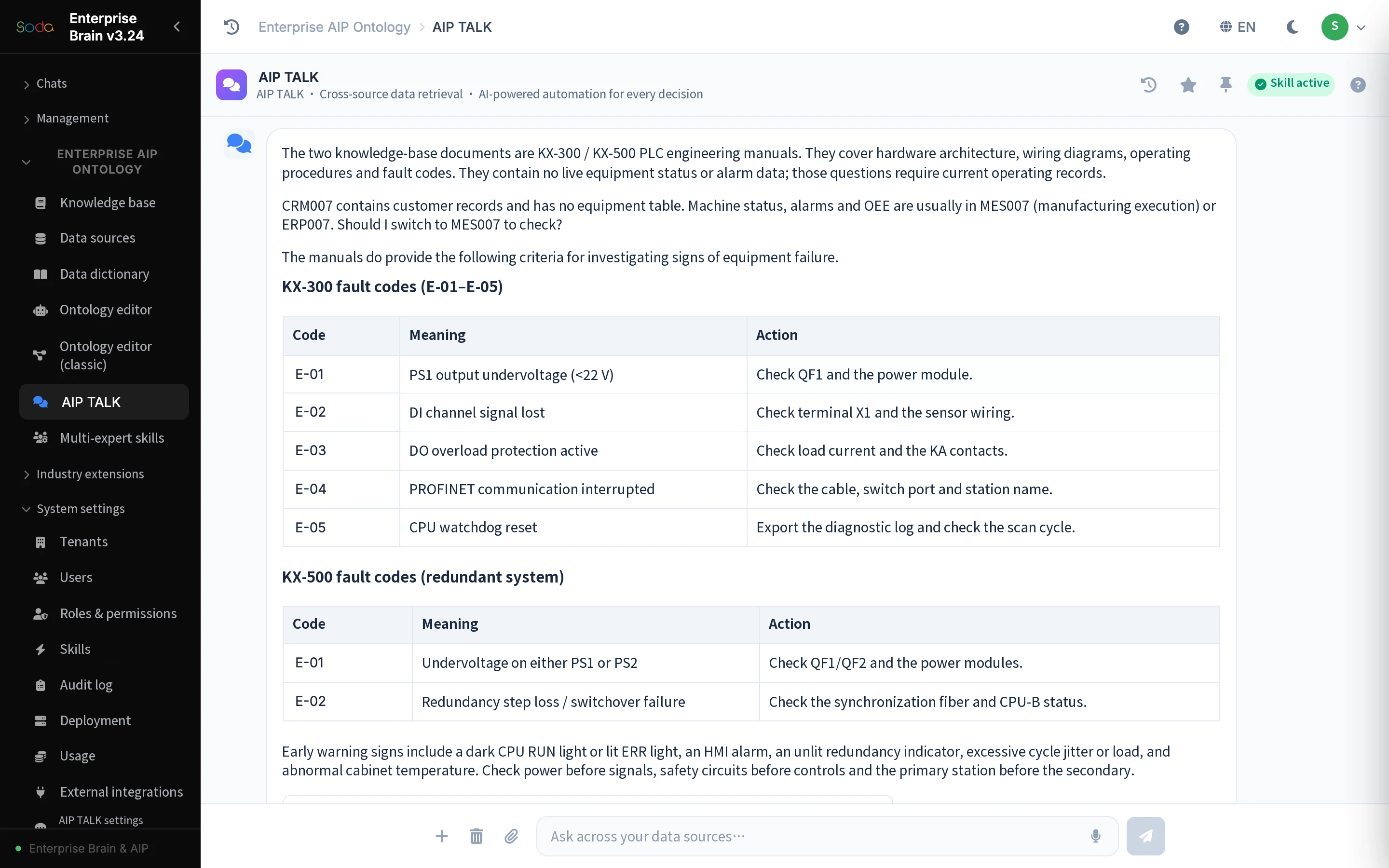
An equipment manual may explain one procedure across a heading, diagram and table. Preserve those relationships when reading search results so a figure or image retains its original context. The knowledge examples on this site use rewritten material prepared for public demonstration.
Locate the passage behind a citation
A useful citation points to a version, section or page where the reader can check whether the source supports the answer. If material is incomplete or contradictory, show the differences and the conditions under which each source applies.
- Confirm the document version and who or what it covers.
- Check that the answer stays within the meaning of the cited passage.
- Keep key procedural steps and specialist judgments subject to human review.
Keep the knowledge base current
When a document is replaced, a rule expires or access changes, the retrieval scope should follow. Include updates, withdrawal, permission changes and recovery after failure in the evaluation so the system does not inadvertently combine old and new guidance in one answer.